Narwhal
Lead Product & UX/UI Designer
Narwhal manages procurement across 100+ vessel fleets, covering 3,300+ consumable items and replacing fragmented email and spreadsheet workflows. Ship operators, procurement teams, and suppliers use it to handle vessel provisioning across ports. I led product design from user research through MVP.

- Problem & Opportunity
-
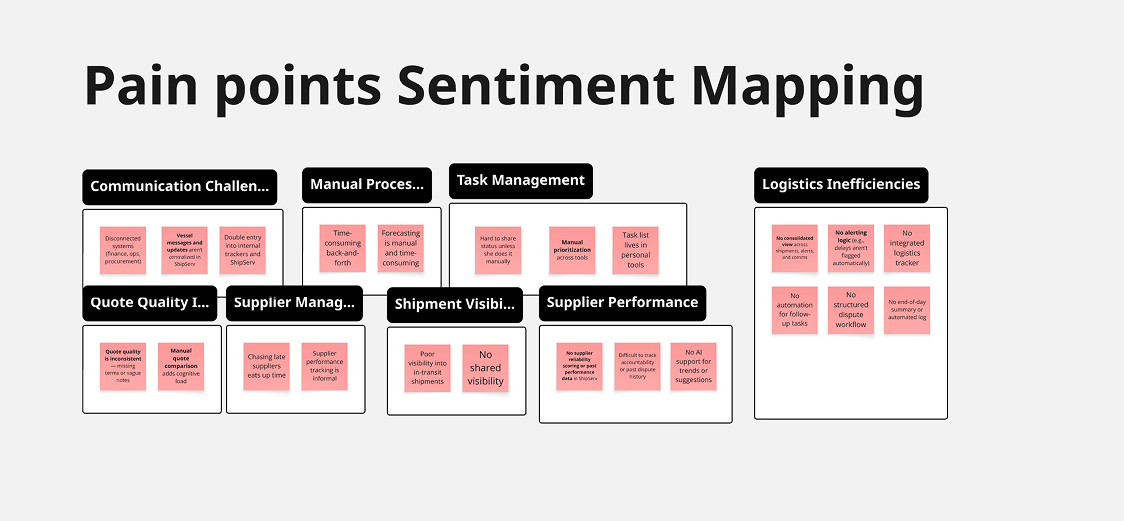
- Maritime procurement runs on emails, spreadsheets, ERP systems, and supplier portals. Officers juggle all of them to manage time-sensitive orders across vessels, ports, and suppliers.
- Critical decisions happen with incomplete data on spend, supplier performance, disputes, and delivery reliability.
- We saw an opening for a reporting-first platform that helps procurement teams spot patterns, cut waste, and make better decisions at fleet scale.
- My Responsibilities
-
- Foundation phase: industry analysis, competitive audits across maritime procurement and ERP tools, user persona definition
- Interviewed Korean maritime procurement professionals to ground decisions in real workflows and operational constraints
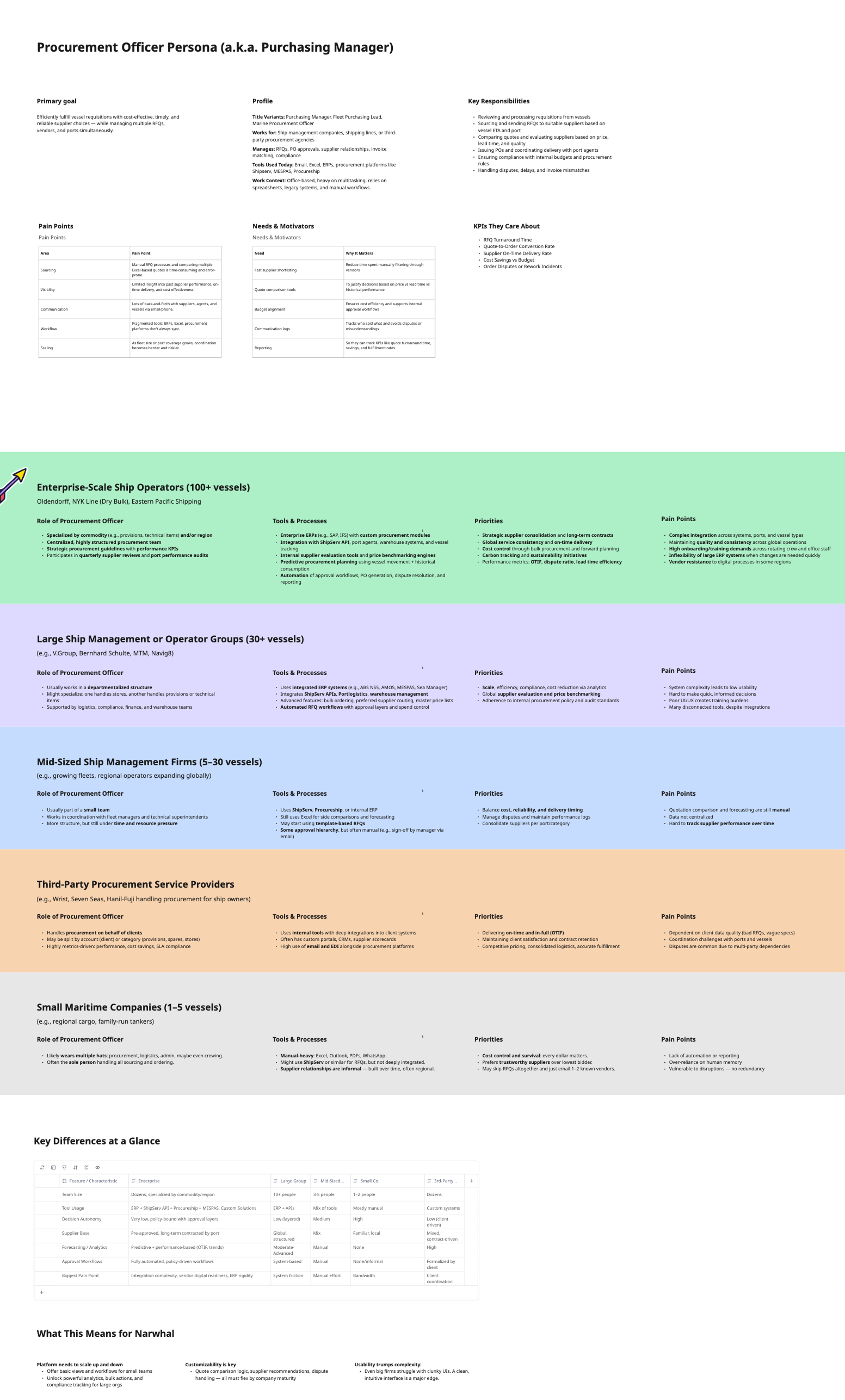
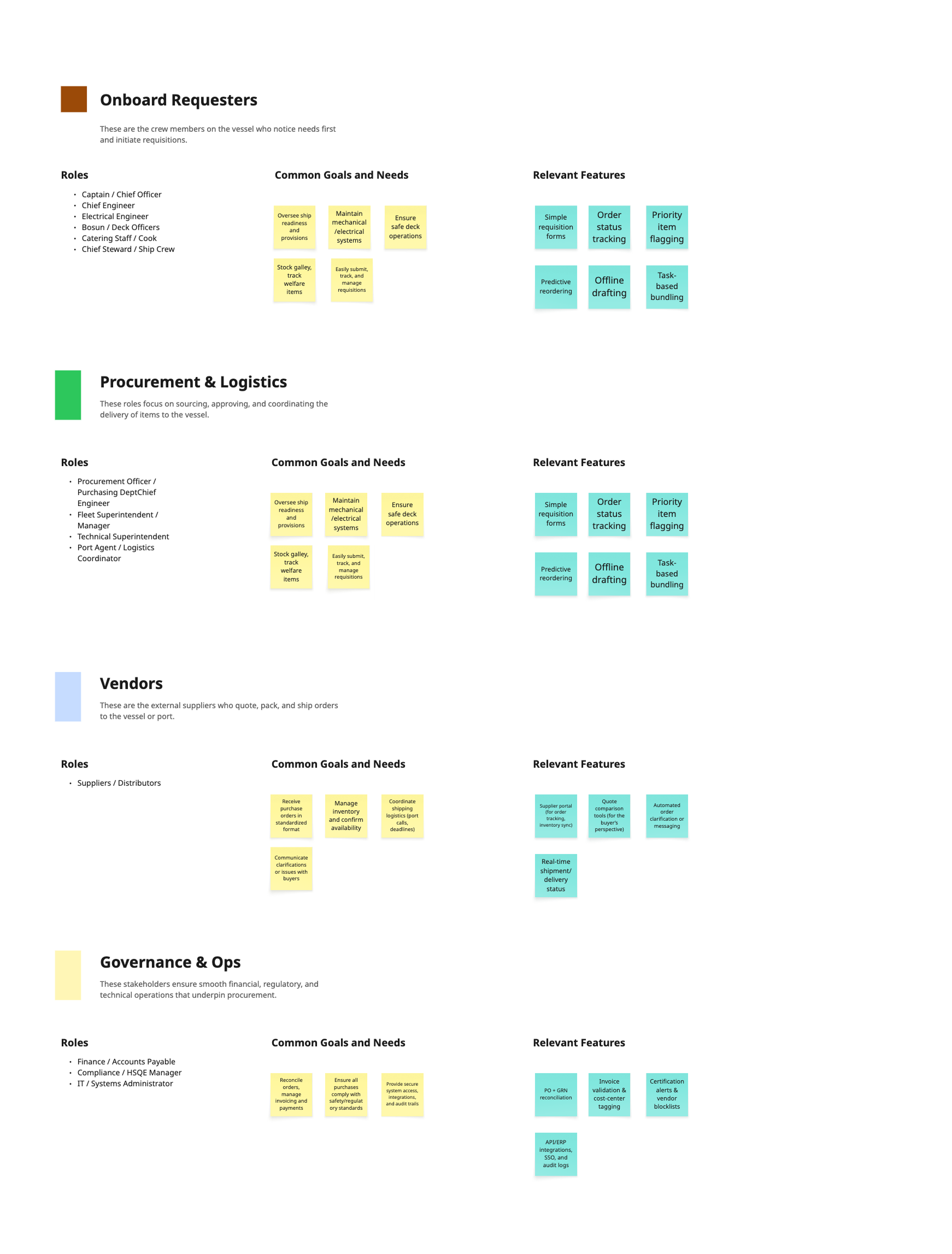
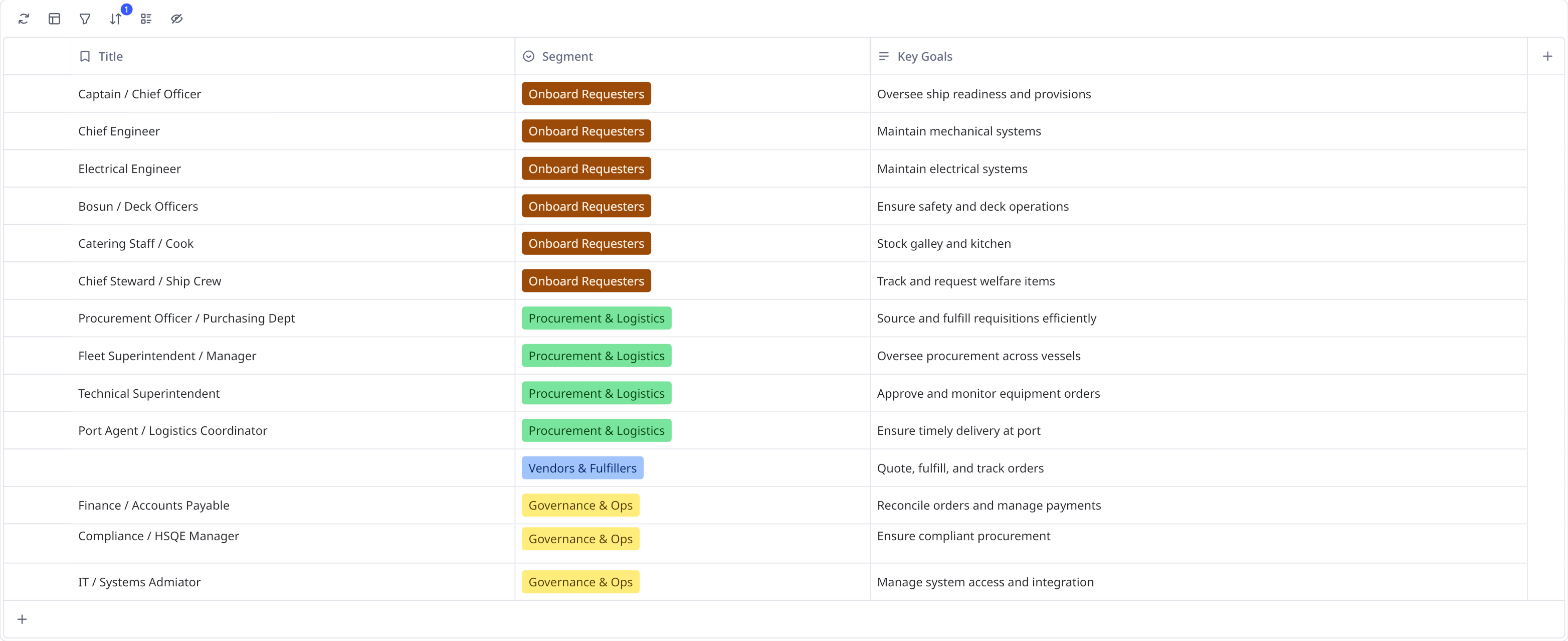
- Defined four persona groups (Procurement Officers, Suppliers, Onboard Requesters, Governance & Ops) across fleet scales from 5 to 150+ vessels
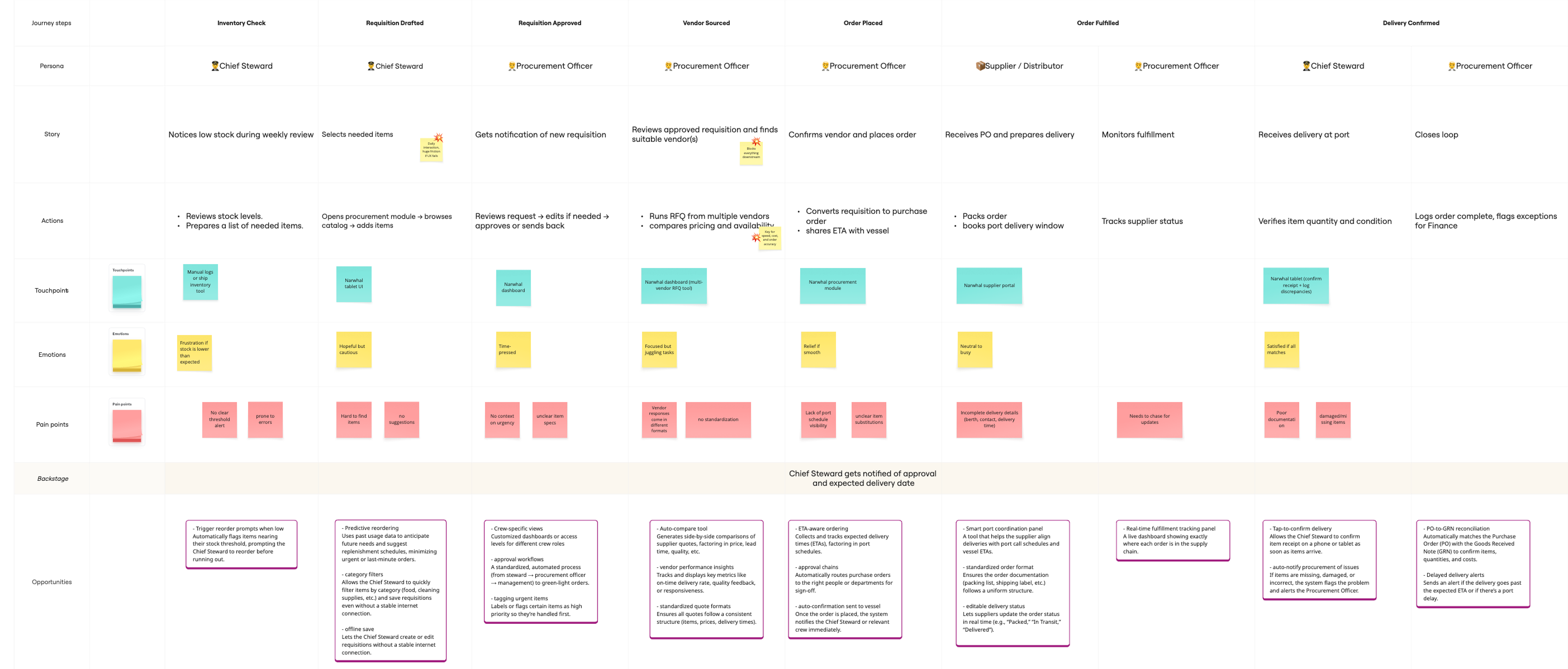
- Mapped the full ship-to-shore procurement journey with pain point analysis and stakeholder documentation
- Scope discovery running ahead of development: E2E user journeys, wireframing, usability testing
- Built a reusable component library and interaction patterns for data-dense enterprise interfaces
- Led UX/UI design for the MVP and North Star vision
- Design Solutions
-
- RFQ inbox as the central hub, with lightweight KPI counters (new RFQs, due today, overdue) for quick triage
- Progressive disclosure to handle enterprise data density. Row expansion, drawers, and tooltips keep tables scannable without hiding critical details.
- Delivery terms and attachment indicators surfaced inline at the row level. This directly addressed the primary source of procurement delays we found in research with Korean maritime professionals.
- Persona-based views for Procurement Officers, Suppliers, and Ship Crew. Shared data structures surfaced differently by role and context.
- UX patterns built for enterprise fleet sizes: multi-vessel views, bulk actions, and auditability
- Outcomes
-
- Before: RFQs managed through email threads, spreadsheet comparisons, and attachments scattered across disconnected systems
- After: structured RFQ review workflow with inline vendor context, side-by-side quote comparison, and exception-first triage
- Built for 100+ vessel fleet procurement: multi-vessel visibility, high line-item density, bulk actions, and full auditability
- Component library and interaction patterns designed to support future AI-driven recommendations
- Key Takeaways
-
- In complex B2B systems, clarity often matters more than feature volume
- Reporting and insight should precede action, not follow it
- Designing for scale requires flexible, role-aware UX rather than rigid workflows
Designing for Enterprise Procurement
Early research revealed that procurement teams were not lacking tools. They were lacking clarity. Existing platforms focused heavily on RFQs and order placement, but offered little support for understanding performance, identifying recurring issues, or acting on historical data.
Interviews with Korean maritime procurement professionals uncovered a critical pattern: the biggest delays came not from slow systems, but from missing or unclear delivery terms and attachments buried in back-and-forth emails. This finding reshaped the interface. We surfaced attachment indicators and delivery/lead-time fields directly at the table row level, with drill-down via row expansion and drawers, instead of hiding them in messages or PDFs.
At high volumes, procurement doesn't break because of speed. It breaks because of ambiguity. The interface had to make information unmissable to prevent downstream slowdowns and miscommunication.
The core design challenge was enterprise data density versus usability. RFQ tables could contain hundreds of line items across multiple vendors with frequent status changes. The solution was progressive disclosure at every level: row expansion for line-item detail, side drawers for quote comparison, tooltips for margin and terms. The primary table stays scannable and fast without hiding critical information.
Because procurement roles vary by organization and scale, the platform supports multiple personas and levels of responsibility. A procurement officer managing a single fleet and a superintendent overseeing 100+ vessels require different perspectives on the same data. Narwhal's modular layout surfaces shared data structures differently depending on role and context.
Our job wasn't to simplify the domain. It was to respect its complexity while making decisions possible at a glance.
Research & Discovery